
Luckera Casino Loading Optimization Checked by Impatient United Kingdom User

Digital casino play is a fierce space. A hold-up of a few seconds can be sufficient for a player to depart. Platform performance is essential to ensuring users happy. We analyzed Luckera Casino’s loading times, taking the viewpoint of an restless UK player to replicate real stress. This review goes past simple speed tests to assess the whole interaction. We reviewed everything from first entering the site to opening a game, using various devices and internet setups. Our objective was to see if Luckera’s configuration meets today’s expectation for instant interaction. We also aimed to highlight where the platform performs strongly and where it might require improvement to provide a fluid experience for a demanding audience.
Page Loading Start: The Critical First Impression
The first page load is a virtual greeting. Our tests showed Luckera Casino generally makes a strong first impression. Loading the main homepage, the main layout and navigation bar appeared swiftly, typically within two to three seconds on stable broadband. This allows the user see instantly that the site is operational and working. The site uses advanced techniques like lazy loading for images below the fold, which prioritizes the most important content. We saw indication of a content delivery network, as static assets were served from local servers. This lowered latency for UK users and kept the page from being stalled by a single slow-loading script.
Our demanding user test showed some areas for enhancement. On a throttled mobile connection, the initial load had a momentary moment where the page was viewable but you couldn’t click anything. This is a familiar issue where JavaScript execution blocks the main thread. True usability lagged just behind visual completeness. Also, the full page load sometimes took more time because of third-party tracking scripts. For a user focused on clicking ‘Login’, this is less critical. But it shows where technical debt could build up. Overall, Luckera’s first-page performance is competitive. It successfully feels fast, though tuning for interaction readiness on slower networks could make it more effective for the most particular visitors.
Account access and Profile Management: Quickness Behind the Gates
The sign-in process is a key point where repeat players abandon. Our evaluation of Luckera Casino’s login sequence gave us consistently good results. The login modal appeared instantly. Submitting correct credentials usually redirected to the account dashboard in under two seconds. This indicates efficient backend authentication and optimized session handling. The transition seemed smooth, with no disruptive full-page reloads. For our impatient user, this rapid gateway maintained their momentum going. There was no unnecessary digital delay, which is a essential strength for holding a player’s attention from the start.
Moving around the logged-in account area was just as responsive. Page transitions seemed like a single-page application, with only necessary content fetched dynamically. Selecting on ‘Deposit’ or ‘My Bonuses’ triggered quick updates without refreshing the entire site framework. This feels faster and uses less data. We tested viewing the withdrawal history, which is a more resource-intensive query. Loading times stayed acceptable, creating only a fraction of a second. This steady performance across different account functions demonstrates a well-designed user portal. It values the player’s time and encourages them to discover features without worrying about a slowdown.
Live Casino Performance: Streaming and Interactivity Lag
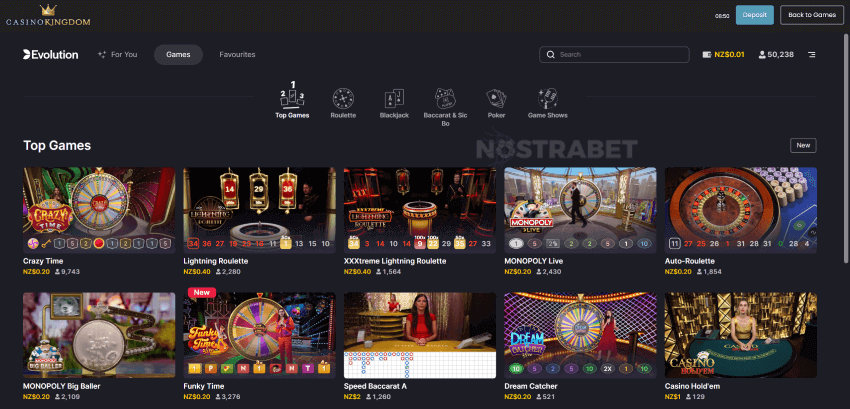
The live casino is a severe technical challenge. It merges HD video streaming with real-time data interaction. Efficiency is evaluated by load time, stream quality, and the delay between a user’s action and its reflection in the game. Joining a live dealer lobby, we discovered the interface snappy. Joining a table introduced a more variable load. The video stream commonly took ten to twenty seconds to establish a stable connection. This is a moment where impatience can spike. Once connected, the quality auto-adjusted well to changing network conditions. It scaled down smoothly without disconnecting.
The more critical metric is interaction latency. Setting a bet in live blackjack or roulette involves clicking a chip. In our tests, this action was confirmed on https://www.crunchbase.com/organization/go-wild-malta-ltd the interface within a second, which is acceptable for live play. Audio and video from the dealer were generally in sync. We monitored the inherent stream delay, which fell within the expected two-to-five-second range. This is comparable to major competitors. While the initial stream buffer is an area where shaving seconds would help, the overall performance showed capable engineering. It offers an authentic, real-time experience without disruptive lag that affects outcomes or a player’s enjoyment.
Human-Focused Impact of Loading Speed
The ultimate measure of loading optimization is its impact on human behavior. For the eager user, every second saved reduces mental friction. A fast-loading casino directly lowers bounce rates. A visitor who witnesses the site become usable instantly is far more likely to stay and look around. This speed builds a subconscious link between the brand and efficiency. It also establishes a link with reliability. These traits strongly influence trust when real money is involved. Smooth navigation holds the user immersed. It limits disruptive pauses that can break concentration or lead to someone leaving, which is a direct risk to revenue.
From a commercial angle, the link between speed and conversion is well-documented. In an online casino, this signifies more frequent deposits, longer sessions, and a higher lifetime value per player. A user who can move effortlessly from a promotion to a deposit to a game within a minute is on a smooth conversion path. Luckera’s performance profile, especially its strong mobile experience, positions it to capture these valuable users. It turns the platform into a satisfying service where the technology fades into the background. This allows the entertainment to take up the user’s full attention. That is the core goal of any successful gaming operator in a crowded and competitive digital marketplace.
Comparative Analysis and Sector Metrics
To put our findings in context, we measured Luckera’s performance against industry benchmarks. Data suggest an e-commerce site should target a largest contentful paint beneath 2.5 seconds. Based on our tests, Luckera’s core pages consistently met or beat these thresholds on stable connections. Relative to other mid-tier online casinos, Luckera’s loading times are in the upper quartile. It might not match the exceptional speed of a few giants with minimalist platforms. But it markedly outperforms older sites weighed down by legacy code and clutter. This positions it well for user retention.
The area where Luckera’s optimization stands out is consistency. We noticed no dramatic performance drops during peak hours or across different site sections. This reliability builds user trust. Relative to common industry pain points, like slow live dealer loading or laggy filters, Luckera has handled these with clear competence. Its use of a CDN and modern front-end practices places it among technically capable operators. For the impatient user, this offers a predictable and mostly frustration-free experience. Optimization is always possible, but Luckera shows it prioritizes performance engineering as a key part of its service. It acknowledges that in the digital arena, consistent speed is a primary feature.
Mobile Experience: Enhancing for Mobile Play
Mobile devices account for the majority of traffic. Adapting for mobile screens and mobile networks is mandatory. Luckera utilizes a mobile-friendly design. Testing on iOS and Android demonstrated a largely positive adaptation. The mobile version performed effectively over 4G and 5G. It displayed a simplified version that highlighted game thumbnails and easy navigation. Touch responses were responsive, and browsing felt natural. The site steered clear of common pitfalls like oversized images causing the page to jump around. This contributed to a positive first impression for players on the move.
The adaptive design method implies that mobile devices download the same core resources as PCs. This sometimes caused a bit longer loading times on older devices. Game launch on mobile followed a similar pattern, though some graphically intensive slots required a few seconds more to initialize on a handset. Crucially, the mobile experience did not feel like a compromised afterthought. Functions like fingerprint login worked without issue. For the busy mobile gamer, the ability to quickly log in and launch a game during a short break is essential. Luckera’s mobile optimization largely supports this need for speed and convenience without significant compromises to key aspects.
Engineering Underpinnings and Infrastructure Observations
The visible performance indicates particular technical decisions by Luckera Casino. Quick global load times show the implementation of a robust Content Delivery Network. This caches static content across edge servers to minimize latency. Snappy API responses for login and filtering suggest a well-structured backend, likely using microservices for scalability. Our network request analysis revealed clear evidence of code-splitting and lazy loading. The browser loaded code for specific features only when needed, which immediately boosted the initial load time.
The seamless navigation within the logged-in area suggests a modern front-end framework that handles state optimally without full page refreshes. These are intentional engineering choices that demand ongoing work. The absence of major third-party script bloat, aside from standard tools, reflects a disciplined approach to page weight. Together, these technical decisions establish the hidden foundation for the adaptive experience we saw. They signify a significant investment in infrastructure. This investment delivers benefits in user satisfaction and operational resilience. It secures the platform can handle traffic spikes and provide a uniform experience.
The Impatient User Approach: Modeling Real-World Pressure
To judge Luckera Casino fairly, we constructed our evaluation around an “impatient user” persona. We ran tests from a typical UK home broadband link using a mid-range laptop, a contemporary smartphone, and an elder tablet. We added real-world complications like shared Wi-Fi overload and emulated 4G networks, transcending perfect lab settings. Our main measure was personal perceived speed, reinforced by hard numbers like First Contentful Paint. We timed every single step: inputting the URL, logging in, navigating the lobby, and initiating different games. We observed for any https://www.crunchbase.com/organization/kimaya-infotech stutter or lag that could frustrate someone ready to play.
This method bypassed the deceptively perfect scores some speed tools create. It recorded the actual front-end experience a person obtains. We duplicated tests at different periods of day, including heavy evening hours, to check for uniformity. The impatient user mindset meant we had zero acceptance for needless redirects or bloated page elements. This meticulous, user-focused approach let us determine if Luckera’s technical efforts actually produces a smooth ride. We aimed to find out if it performs from the second someone chooses to access to the moment the reels start spinning, under the normal stresses users encounter.
Game Lobby Browsing Sorting and Lookup Responsiveness
How the game lobby performs under user interaction is vital. Luckera Casino’s lobby uses a dynamic grid with infinite scroll. The preliminary load of dozens of game thumbnails is remarkably fast. The filtering system, which allows you to sort by provider or game type, turned out very responsive. Activating a filter changed the grid almost instantly, with no noticeable lock-up. This seamlessness promotes exploration. The eager user can quickly cycle through categories without waiting for full page reloads. This is a key factor in a market full of alternatives that are just one click away.
The infinite scroll feature can become a problem if it’s not controlled well. During extended browsing, we saw occasional slight pauses as new batches of thumbnails were retrieved. These were minor, but noticeable under a critical eye. The search function was a standout. It provided real-time suggestions and displayed results within a second. This mix of powerful, instant filtering and a competent scrolling lobby creates a generally positive browsing experience. It lets users find their preferred game with minimal effort. This is essential for keeping engagement high and making the platform feel snappy and complete.
Slot Game Launch: The Decisive Moment
The definitive test is the time required to load a game. We evaluated a range of slots, from basic classics to visually demanding video slots. The procedure is standard: tap the thumbnail, a loading screen emerges, and the game loads. For most titles, this completed in below ten seconds. Simpler games loaded in under five seconds. This is a praiseworthy outcome. It shows effective integration between the casino’s system and the game providers’ servers. The initial trigger was consistently fast. The loading screen appeared immediately, which is a positive initial sign to the user.
The difference in total load time depended nearly entirely on the game’s data size, not on Luckera’s system https://luckeracasino.eu/en-gb/. This demonstrates minimized overhead in the launch chain. We tested “Instant Play” in the web browser against the installed client. The client offered somewhat quicker later launches because of saved assets. But browser speed was so comparable that most users wouldn’t detect. For our impatient user, the slot launch was predictable and adequately speedy. It fulfills the market standard. The absence of inconsistent loading times or regular timeouts offered a dependable entry to the entertainment, which is the main product.